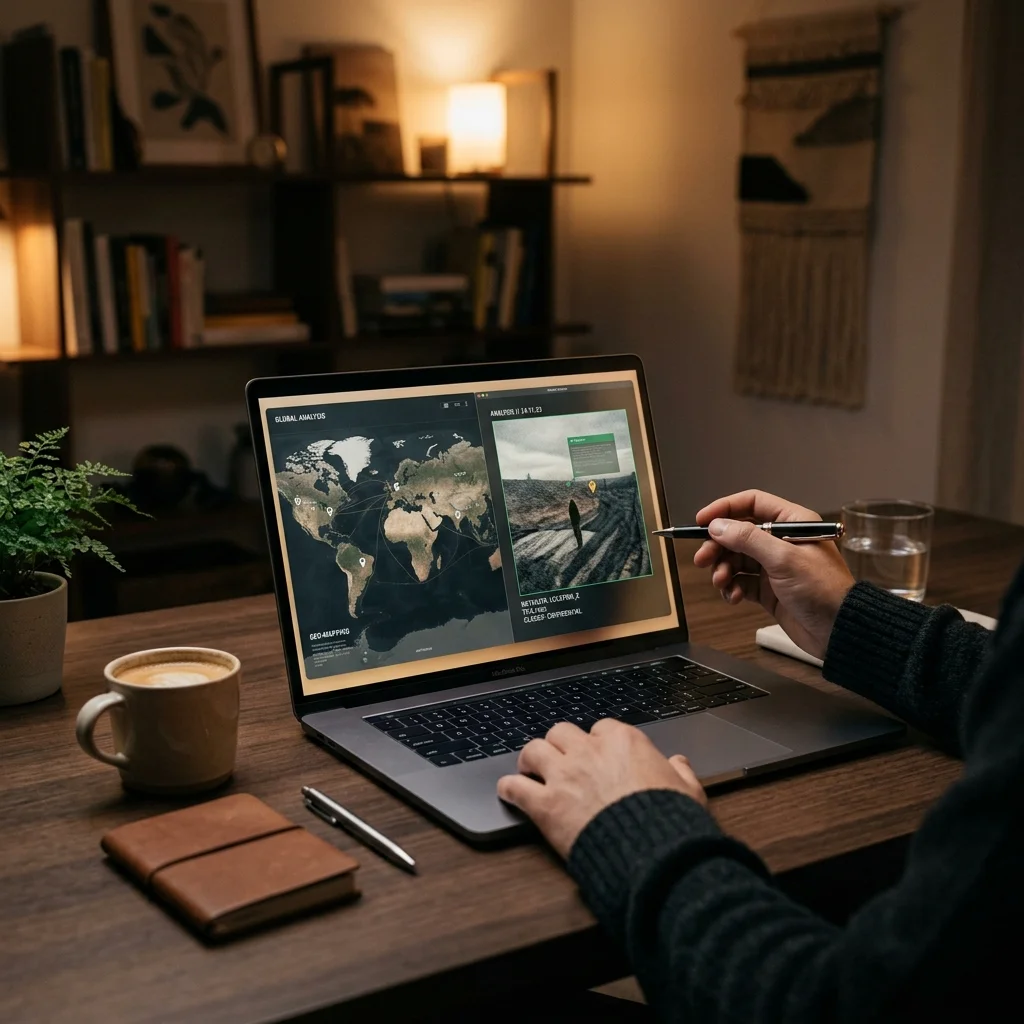
Have you ever looked at a photo on social media and wondered exactly where it was taken? In the world of Open Source Intelligence (OSINT), a photo is not just a static image; it is a treasure trove of data waiting to be decrypted. The techniques we often catch glimpses of on TikTok—such as tracking a location based solely on the sun's position or the shape of a cloud—are actually grounded in deep scientific principles. This article will dissect the techniques of "Digital Shadow Tracking" and "Visual Triangulation" used by professional cyber investigators to map locations with meter-level accuracy, without needing access to military-grade satellites.
Digital Metadata: The Invisible Breadcrumbs
The first step in any photo investigation always begins with what is invisible to the naked eye: EXIF (Exchangeable Image File Format) metadata. Every time you press the shutter button on a smartphone, the device records dozens of data points, including the camera model, ISO settings, and most critically, GPS coordinates. While major platforms like Instagram or X (Twitter) automatically strip this metadata when you upload a photo, many smaller websites, personal blogs, or messaging platforms leave this data intact.
A professional investigator uses tools like ExifTool or Jeffrey's Image Metadata Viewer to extract this information. If you are lucky enough to find GPS coordinates, your job is done in seconds. But what happens if the metadata has been scrubbed? This is where the true art of OSINT begins. We must shift from digital data to the visual data embedded within the composition of the image itself.
Landmark Mapping: Reading the Visual Landscape
Every photograph contains a geographic fingerprint. Landmarks are the primary keys. This isn't just about major monuments like the Eiffel Tower or the Statue of Liberty. A keen investigator looks for small details that are often overlooked: the type of utility poles, the design of vehicle license plates, the language on billboards, or even unique architectural window designs. This technique is known as Visual Geolocation.
One of the most powerful tactics is searching for "Unique Identifiers." For instance, if the background features a small grocery store with a unique name, a targeted Google Maps search can narrow the search area drastically. Tools like PeakVisor even allow investigators to match mountain silhouettes in the background of a photo with global 3D topographic models. If you see a range of mountains, PeakVisor can tell you exactly which coordinates that silhouette would look identical to the one in the photograph.
Shadow Analysis: The Mathematics of Time and Space
This is the technique that frequently goes viral on TikTok for its seemingly magical quality: tracking locations from shadows. This technique utilizes the principles of solar trigonometry. Shadows never lie about time or cardinal directions. By observing the length of a shadow relative to the height of an object (such as a lamp post or a person), an investigator can determine the sun's elevation angle.
Tools like SunCalc or Shadowmap allow us to input the date the photo was taken and view the sun's position at any location in the world at that time. If you know a photo was taken at 10 AM on April 20th, you can run a solar simulation to see where shadows would fall correctly according to the photo. If the shadow falls toward the northwest with a specific length, you can map the street's orientation and cross-reference it with Google Earth satellite imagery. It is a blend of astronomical science and visual precision.
The Digital Detective’s Arsenal: Essential OSINT Tools
To perform high-level investigations, you need the right set of tools. Beyond the common Google Maps Street View, experts use Yandex Images because its visual search algorithm often excels at recognizing locations outside the United States and Europe. For weather verification, sites like WolframAlpha can provide historical weather data at specific coordinates at a specific hour—helping to verify if the clouds or rain in a photo match the meteorological data of that day.
Furthermore, using Mapillary and OpenStreetMap often provides fresher and more detailed street-level imagery than Google Street View, especially in rural areas or developing countries. Professional investigators often combine all this data into a credibility report before drawing a final conclusion about a location's exact coordinates.
Security and Ethics: The Boundaries of Investigation
It is crucial to remember that the power to track locations carries significant ethical responsibility. OSINT techniques should be used for legitimate purposes, such as investigative journalism, finding missing persons, or fact-checking social media content. Tracking an individual's location without consent (doxing) is not only unethical but can also be illegal in many jurisdictions.
For you as a user, this article serves as a reminder to always be mindful of what you share. Ensure that "Location Tagging" on your camera is turned off when taking photos in private areas, and use metadata stripping tools before uploading sensitive photos to the internet. In this digital age, privacy is something that must be actively maintained, not merely expected.
Sources
- Bazzell, Michael. (2025). Open Source Intelligence Techniques. IntelTechniques.
- Stratos Jet Charters. "Shadow Analysis in Geolocation." OSINT Framework.
- Google Earth Outreach. "Advanced Geo-tools for Investigative Journalism."
- Bellingcat. "The Beginner's Guide to Social Media Verification."
Disclaimer: "All content is for educational use only. Respect privacy laws and ethically source information."